Miriam Allred (00:10)
Welcome back to the Home Care Strategy Lab. Today in the lab, I'm joined by Jamie Arber, the executive director at the Supported Living Group in Connecticut. Jamie, welcome to the show.
Jamie Arber (00:22)
Thank you.
Miriam Allred (00:23)
You and I have recently got connected and I've learned a lot about you and about your organization recently. And so I wanted to have you on the show to unpack really your business model. I just said this to you before we got on. You're not my typical guest, but I think what you all are doing and what you've accomplished is really interesting and relevant to home care companies that are looking to branch out and diversify and figure out how to become kind of a comprehensive solution. So
before we get into your business model and into the weeds, I want to have you introduce yourself. Your career path has been pretty fascinating from England to the U S from psychology and marketing to becoming the executive director at I believe what is Connecticut's number one provider for brain injury support. Tell us a bit more about your background and your journey getting to where you are today.
Jamie Arber (01:09)
So I grew up in England in a very, very working class family. I was the first member of the family to go to university and I specialized in psychology.
That was my piece. I really wanted to help people. And my mum had worked in the caregiving field. She was a caregiver, but in the school system, working with individuals with intellectual needs. So I had graduated from the University of East London and was offered the chance to come out to the States. When I landed, it was interesting because trying to find a job in the field was very, very difficult. really wasn't, you know, I've got a degree in psychology, but the reimbursement, like
getting paid wasn't looking great. So I ended up getting a job in sales and marketing for a very prestigious and high level company, Elise Van Breen Antiques. They specialize in Swedish antiques and interior design. And they're very well known in Connecticut and Nantucket and places like that. So I was working for them for a number of years and the owners of that company were always pushing me to go back to school to get my master's degree. So I did, I went back to
school to get my master's degree in community psychology. And in 2010, the housing market crash happened. And when the housing market crash happened, not many people were looking for Swedish antiques and interior design services. So that was my opportunity. I just graduated with my, my master's and I had applied for a few different positions and I was, I had two job offers on the table. I had a hedge fund in Westpool doing HR and I had this little
and Pup operation that specialized in brain injury in Southbury, Connecticut. And something really spoke to me about helping people and working with people rather than babysitting people. And I chose the Mom and Pup operation at a significantly lower salary, but it was something that interests me. Even going for the first interview, nobody knew what to do with me. I had no tie at all. They kind of just gave me an office and saw how I wanted to see how it went.
and within the first month the director had quit. A month later the assistant director had gone out and worked as comp and I said, why don't you have a go at it? And it kind of went from there, to be perfectly honest with you.
Miriam Allred (03:34)
Amazing. How old were you when you came to the States?
Jamie Arber (03:36)
I originally came over when I was 19. I spent three years here. My sister offered me the opportunity to come over. They sponsored me and I went to Western Connecticut State University. So I did three years, then went back home for two years to finish up my degree in England and then came back over permanently in 2005. I mean, sorry, 2005. I joined the Supported Living Group in 2017.
Miriam Allred (03:59)
There we go, there we go. I was like, wait, I've got my dates wrong. And then I was gonna ask how long you've been at the Supported Living Group then now.
I think you're the first Brit that I've had on the show, which feels like a big personal milestone. I listen to a lot of podcasts and I listen to a lot of ⁓ guests and hosts from Europe. And so you're my first, which is always just exciting for me. So I'm excited to learn more from you. What a great story. And now here you are seven, eight years in this role. And it was kind of baptism by fire. Like you just shared, you had education and experience, but this was net new to you for sure.
Jamie Arber (04:44)
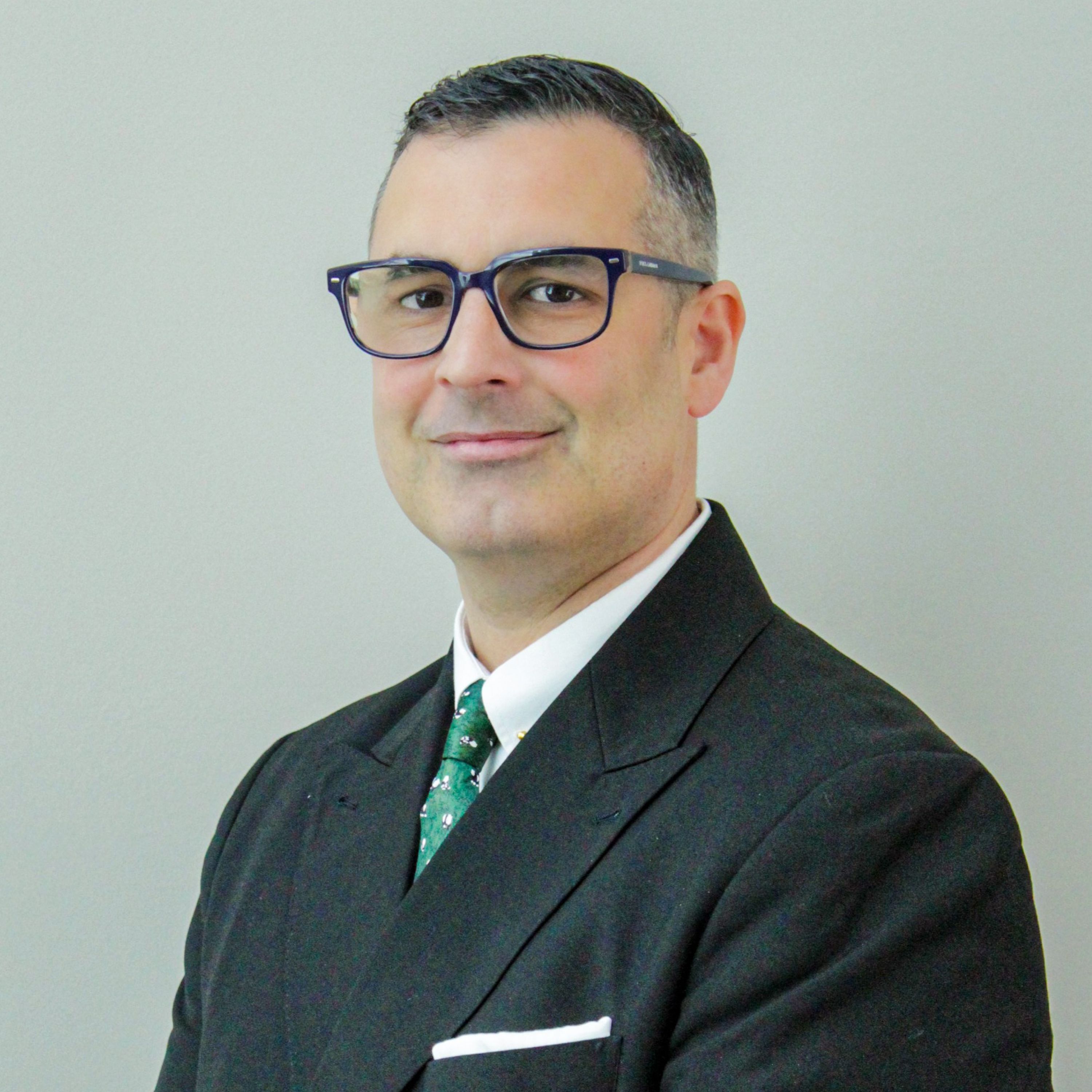
For 100%, I feel that the sales and marketing piece, working with very high end clients with high expectations and the relationships that you have to build benefited me. I was kind of a wild card thrown in and meeting with referral sources, how you see me dressed today is how I dress. I'm typically in a suit or I'm in a blazer shirt and tie. That made a world of difference in the field. It was kind of interesting to see
how those referral sources respond and also, you your word is your bond. That's kind of how I work. So if I say something's going to happen, it's going to happen. And that was something different as well. So very rapidly, all of a sudden, when I was working for that mom and pop, the referrals started to come in. ⁓ We became more professional and we grew. mean, within a three year period, we'd grown to the largest provider in Connecticut for brain injury during that initial first three years ⁓ prior to.
and moving on from that agency. And it was a great opportunity. I learned a lot. I learned what to do and what not to do in business. And I also sitting there looking at the brain injury part, how services could be improved with the right structure that was in place if the investments were done correctly. And that's something that's benefited me for a long time as well.
Miriam Allred (06:08)
So you're already referencing this brain injury support. And so I want to have you explain the business model. explain what their core service lines and what their core kind of business model was back then that you were walking into. And then we'll fast forward and kind of talk about like the transition, the growth, the evolution, but what was the business structure that you were walking into?
Jamie Arber (06:30)
So I was asked to join the company by Christopher Brisson, who is the president founder and his wife, who's the vice president, Kimberly Brisson. The company was mainly based in Eastern Connecticut and the main...
payment models were Medicaid, ABI waiver. And then we also had some private pay business that had occurred, but was more specific towards brain injury and workers comp. But those came along, those were very, very rare fishes that come along once in a while, if you know what I mean. So there was a small number of clients around 11 clients and it was mainly in Eastern Connecticut at that point. So when I joined Chris basically,
said to me, what do you need? I said, I need a building. If you can give me a building, then I can build, I can develop the rest out. And we spent a little bit of time looking for a location in Western Connecticut. And we found a spot that was very industrial, which most agencies, why were you looking for an industrial building? And the reason was because I knew I could build out a creative arts program. And I'd had success with that in the past, as well as adding in some new components that hadn't been there before. So we, we
had a we we had an industrial arts program as well as a creative arts program. What we did there was expand us. We had the Medicaid waiver, which was brain injury. Again, we had a cluster of individuals that were coming referral sources again, referring into us. And over a period of time, we started to develop our PCA waiver and again, another Medicaid, but a different service line. And then we were always available for private pay sources. And we had a couple of
clients that had come from our referral sources which were legal entities that had had long-term care opportunities and they were managing trusts for those individuals. So that's kind of how we started to grow and we grew rapidly. We outgrew that location in a year pretty much.
Miriam Allred (08:37)
So you said it, a lot of operators come to you and say, why the building? Why the programization? I think that's my question as well. To make sure I understand, you were taking care of these clients out in their homes, but you wanted a building to build out programs as a differentiator, but also as a way to serve these clients in a more meaningful way. Is that the premise?
Jamie Arber (08:49)
Yes. Within the acquired brain injury field. There are specialized agencies that only do brain injury. There are other agencies that more home care based that provide services in the residential locations of each and every client. What we had looked at as a business model was by providing these specialized services, you develop longer term clients.
because you're giving back a sense of purpose and it also reduces down any competition coming in and taking the clients from you because unless you're able to offer something very similar.
you're not going to leave the agency to go sit at your house and not doing anything. The other piece to consider is the vast majority of individuals that we provide services to under the Acquired Brain Injury Waiver Programme are 24-7 in nature. These are not four hours, three hour cases. These are 24-7 cases where you've got to come up with something rather than sitting there looking at each other in the face all day long because that's when you start to have the behavioural issues and
it becomes very problematic. Enabling an individual to re-find and re-discover a sense of purpose, I think is huge. And that's where the program locations enabled us to do that. And the creative arts that we incorporated in is also therapeutic in nature, as well as skill building, as well as motivating, and it also allows a social element to go on. Individuals are making friends. That's another reason why you don't want to leave the agency because your friends are there. You're doing stuff on the weekends with your
other. We've had individuals meet and program, get engaged, live together and we've supported that. So those are some of the success stories but that ties in with the business model because the acquired brain injury waiver in Connecticut you can go on to that waiver at age 18.
And when you leave the waiver, it's a lifetime waiver, is when your medical needs go beyond what is deemed community based. So you're needing a system to do ADLs and elements like that. So in terms of building the brand, in terms of financial security, making the investments in bricks and mortar is something that's fundamental to our business model.