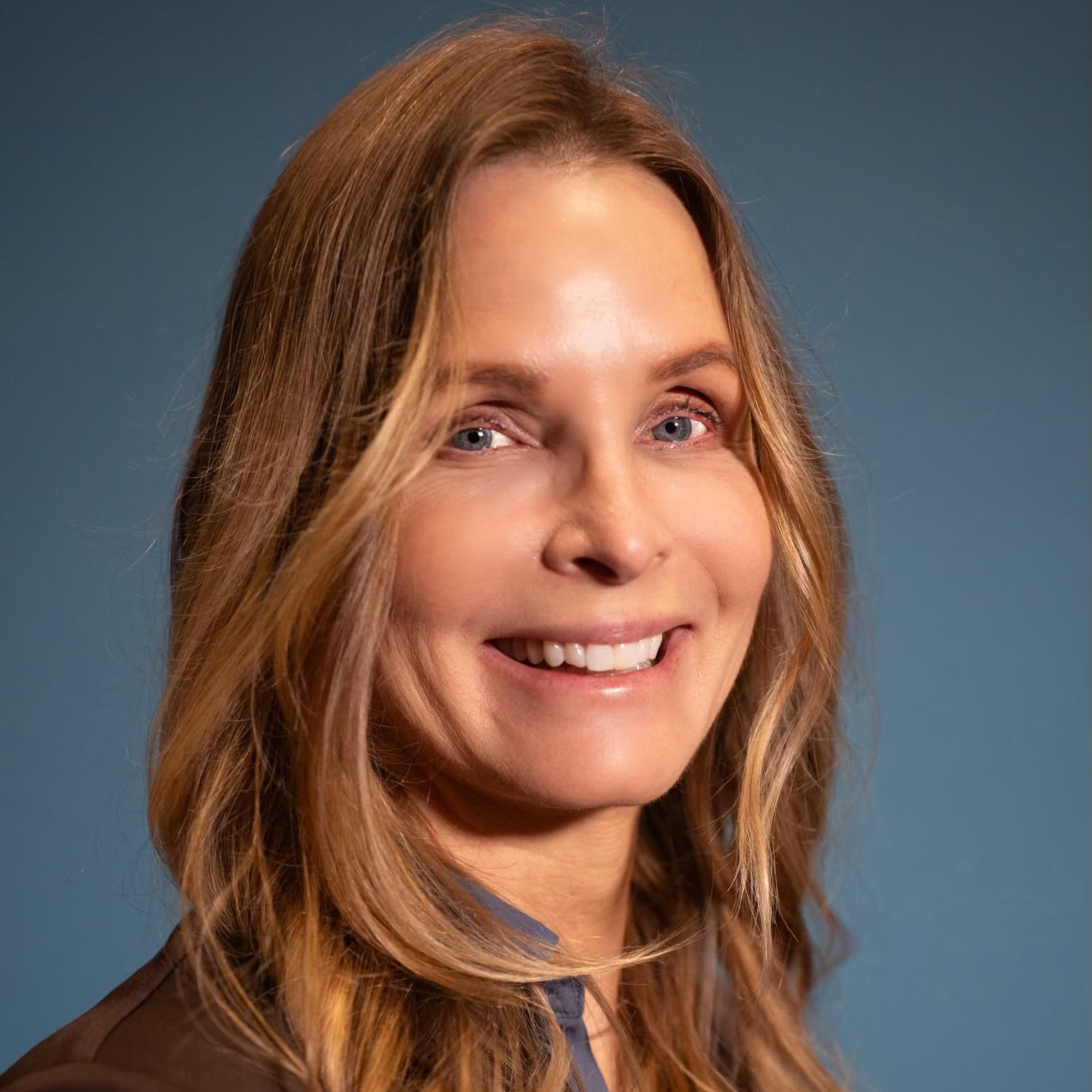
Miriam Allred (00:01)
Hey everyone, welcome back to the lab. This is Miriam Alred, your host. I am super excited for today's conversation. sitting across from Paula Marks, the VP of At Home Caregivers in California. Paula, welcome to the show.
Paula Marks (00:15)
Thank you so much, Miriam. I'm so grateful to be here, grateful for the opportunity.
Miriam Allred (00:20)
You're grateful and I'm grateful because this conversation is going to be fantastic. have interviewed a lot of people and I'm not usually particular in people prepping notes and coming super prepared, but you have. And normally I go super off script and ask you a bunch of random one-off questions that come up in real time. today I actually want to stick to the script to make sure we get through all of this great information. So thank you for coming prepared.
Paula Marks (00:44)
Thank you so much, yes.
Miriam Allred (00:46)
For those that don't know you, let's go ahead and start with your introduction. Tell us a little bit about yourself and your background getting to where you are today.
Paula Marks (00:53)
Thank you. Yeah, so that probably has to do with how prepared I am. I actually come from an academic background. So ⁓ I have a master's in sociology, actually criminology. And so I'm a systems thinker. And I've kind of used that and applied that to home care. ⁓ And I always am kind of over-prepared. I always get places at the first person to be there. And that's just kind of the way I think, because I don't want to miss saying anything really, really important.
I got into home care first through being a business development person at a company called Visiting Angels. And Visiting Angels, as a lot of people know, is a national home care franchisor. And I ⁓ had the privilege of working with a franchisee that had three different offices serving the Bay Area. And I loved my employer. It was probably one of the best professional relationships I ever had. And I actually quoted her just a second ago. She said to me, Paula,
You need to be specific to be terrific. And I really learned sort of how home care operates. And I kind of moved up in that ecosystem and it was a great.
privilege for me to kind of have that education. And that brought me to a company called Tender Rose dementia care specialists who I know you'll be interviewing in a little while the founder of that company. And that was a very unique company that truly specialized and differentiated in home care, which there's not a lot of true differentiation in home care out there. And Tender Rose specialized in providing a very high quality service for folks who are going through cognitive decline. And it was very optimized in terms of the
training, the quality of service and the outcomes. It was a very ⁓ expensive offering because investing in training and parent and paying very high quality caregivers a wage that would retain them to solve these really complex problems out there and then having an administrative team that has the problem solving capacity to deliver in that care. You know, it made for a sort of a more affluent offering. And of course, scaled that company and of course, that company got acquired as
happens. And then I went into a larger national ecosystem. And in that moment, I was able I was part of a little executive team that was appraising tech for adoption into the home care space. And that was it was a bit accidental. I had been thinking about tech, but I really had a kind of aha moment. So I had sort of got that foundations of operations. I had seen how innovation home care is truly possible. And then looking at tech, I really activated my
passion because I'm from very humble means I'm not from wealth. And you know, there's so many older adults who fall under the elder index. So they're house rich, cash poor, or even just in the financial milieu that we are now people are very concerned about their ability to afford long term costs. And I really saw the light bulb went off and I thought, my gosh, technology can really help us be better quality providers and maybe provide service options that are in a more affordable space.
So I'm super excited about that opportunity. That morphed me over into doing some consulting. And at that time as well, I was providing care for my parents. I'm from Canada. And both my parents unfortunately have vascular dementia. So I needed to be very nimble and flexible about moving across countries. That got me to work for a company called Pando.
health and Pando Health through that tech kind of space is a consortium of investors who are investing in smaller to mid-size home care agencies but they're very very unique because what they're doing is not rolling up those home care agencies they're providing infrastructure and support so those local home care companies can just do better be better so they don't intend on
getting rid of all the staff or kind of changing that geographic footprint or really disrupting the kind of learned experience of those operators in that system but provide that wraparound and I had the privilege of morphing over into one of those acquisitions which was a company called At Home Caregivers to be their VP and in that space I'm bringing innovative concepts and different service lines into that ecosystem which is serving At Home Caregivers serving the Merin and Sonoma County area. So very excited.
Miriam Allred (05:25)
I love it. Every market is truly unique, but you've told me a little bit about Marin and Sonoma County, and I do think they are particularly unique. Talk just briefly because it'll bleed into our conversation about some of the challenges that you're up against because of the geography.
Paula Marks (05:40)
Yeah, Marin County is super unique. It is sort of geographically located kind of like an island. It's north of San Francisco over the Golden Gate Bridge and it's very wealthy. So unfortunately, children of older adults and certainly caregivers can't afford to live there. It has the largest demographic of older, older adults. So 85 plus in the nation. And so there's all these older adults who are living on the sort of
where you have to get to through bridges and they're by themselves. their kids can't, family caregivers can't live there, paid caregivers can't live there. And so it presents a really unique problem for staffing those cases ⁓ and getting caregivers to come there. But very, very high need and definitely means too.
Miriam Allred (06:29)
Yeah, so that's going to kind of set the tone a little bit for the conversation that we're going to have. We're going to talk about the workforce. We're going to talk about technology because that's a passion and focus for you. We're going to talk about family's perception to care and different pre-care and preventative models. And then also metrics for where the industry is headed. know me and that I love to go really deep on specific topics, but the conversations that I've had with you, can articulate like really well where care is and where we're headed. And I think this conversation and the topics we're going to cover today are what every home care CEO needs to be thinking about in more depth. And you're going to just like kind of crystallize it all for us. ⁓ So I want to start with kind of an open-ended question, which is around what has changed? We're going to talk about the workforce. What has changed with the workforce in the last couple of years that you've seen firsthand? Like in the last two to three years, what has fundamentally changed about the workforce and then why does that matter?
Paula Marks (07:27)
Yeah. Thank you your confidence, Miriam. I hope I can do as good a job as you've set me up to do. Yeah, it's really, really hard. And this is why I did so much homework because it's super important for people in the care continuum, but also for consumers to really, really understand the dynamic that's happening right now. So we have, as we all know, there's a caregiver shortage. I mean, it's acute, it's getting worse and worse and worse. So the caregiver to client ratio both on the family and on the professional caregiving side just absolutely is not there. So this is an acute crisis. At the same time, the total available need for care is escalating. So we have a fundamental supply and demand issue. In addition to that,
Everyone is experiencing financial insecurity, even the affluent. lot of older adults, think 80 % of older adults are experiencing financial insecurity right now. And so a lot of people thought payers or CMS might be able to offset some of their long-term care costs. They're realizing very quickly that they can't. And they're also really realizing that how expensive care is, you know? And so that's a fundamental problem. And so ⁓ there's always been a bit of tension between what caregivers want and what clients want in that clients want sort of really ⁓ affordability, they want flexibility, they want short shifts and so on and so forth and caregivers obviously need to put food on the table, they have lives, they have families so they want consistency, they want long-term cases and those two are skis kind of going in the opposite direction but the thing that pulls them together is that both
want quality and both want to get sort of out of crisis mode and be focused on living well. And that's sort of the place where I'd like to land is how do I be an excellent employer to the caregiver labor force so I can retain really excellent caregivers and provide them with great opportunities and career paths and also kind of meet clients where they're at. And one of the other things that's super problematic is because of the financial concerns and sort of the vagaries of the labor force. Opportune business models are coming into the fold, particularly in the Marin County where I live, and that's referral agencies or caregiver created home care agencies. And that's a real threat because
While I can understand why caregiver would want to start their own agency, kind of cut out the middle person, the way that home care does well is by being a really great operator and running a business and being a licensed provider and doing billing and so on and so forth is very, different from being a really good caregiver. And that those different business models which aren't
you know the employer on record actually becomes the older adult not the agency and and people are sort of cutting costs and optimizing for that model that puts a lot of people at risk it puts Clients at risk, you can't if you're a referral agency or private caregiver, you can't have backup You're not providing workman's comp. You're not carrying any liability You can't set schedules. You can't do training because then you're actually an employer and those are legitimately the
number one things you need to be able to do to improve quality and on the caregiver side caregivers who are going into those businesses or being employed by referral agencies don't understand that they have to withhold taxes right and they don't have any kind of protections in the home and so in Marin County because of this essential tension we're seeing more of these business models pop up the amount of elder abuse is going up both elder abuse physical and both financial
It's a real problem. Home care operators have to figure out ways to be sensitive to the crises that both caregivers and families are operating under, provide education about what is the value that they're actually purchasing and what does that mean for their long-term care journey. Come up with innovative options and meet them where they're at. That's what I'm trying to do very complex problem.